
Funerary landscapes in the Carpathian-Dniester area at the beginning of the Late Iron Age (FSCAPES)
Recording and exploring funerary finds across the Carpathian-Dniester region.
Rites & Rituals
From a geographical point of view, the Carpathian-Dniestrian region has always been an area of cultural confluence due to its geographical position at the western borders of the great Eurasian steppe. The same was the situation in the early period of the Late Iron Age (5th-3rd centuries BC), when the region analyzed by us represented a meeting point of the sedentary northern Thracian populations („Getae”) with their numerous hillforts, the nomadic Scythians coming from nowadays southern Ukraine and the Mediterranean civilisation, the latter represented by the Greek colonies and emporia situated at the mouths of the Dniester (Tyras, Nikonion). Literary sources speak of exciting events happening in the 5th – 3rd century BC period: the war between the Scythian King Ateas and Rex Histrianorum, the war of the Macedonian King Phillip II with the mentioned above Scythian king, the ill-fated expedition of Alexander the Greatˈs general Zopyrion to Olbia and others. In any case, as shown by the few written sources and especially by archaeological finds, the relations between these three groups – natives, nomads, colonists – were more diverse than we imagine, as shown by spectacular discoveries such as the Stâncești, Cucuteni and Olănești hoards.
In our quest to analyse and understand, as much as possible, the evolution and complex interrelations between these groups, funerary finds have a unique role because they provide valuable insights into these communities’ beliefs, attitudes, and practices. Burial practices can reveal information about social status, family relationships, religious beliefs, and even the healthcare and diet of individuals.
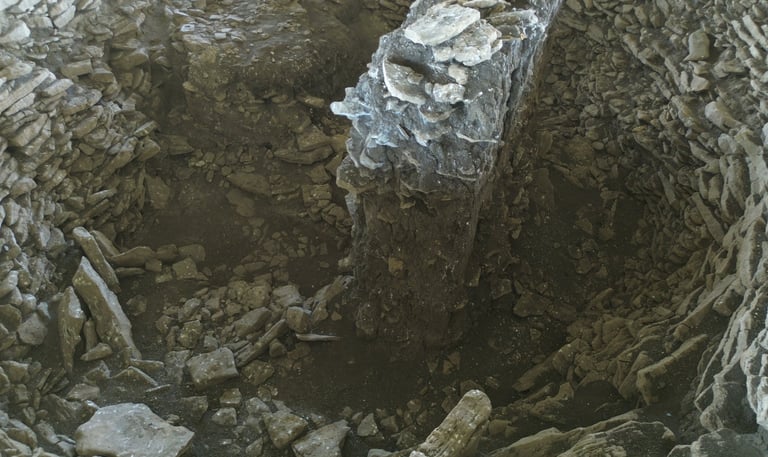
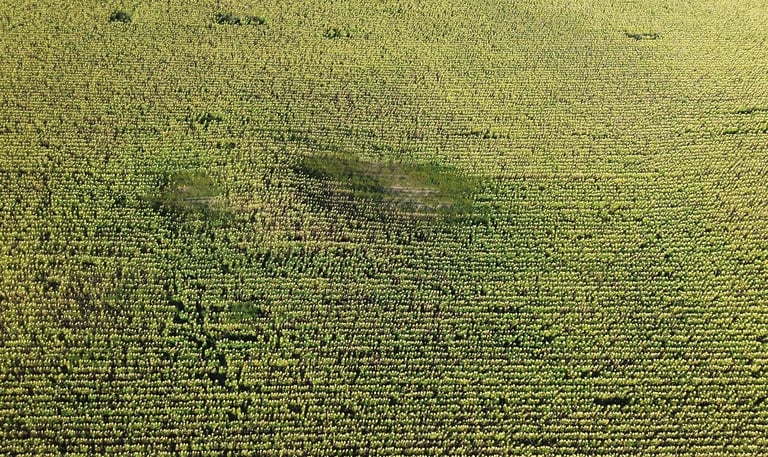
In this timeframe, the funerary landscape of the Carpathian-Dniester region is rich and very diverse, as reflected in some better-known archaeological sites and discoveries. There are plain incineration necropolises, such as those from Strahotin and Slobozia (Romania) or Hansca (Republic of Moldova). There are tumular graves with incineration burials, such as the ones from Cucuteni - Băiceni (Romania). Then there are plain inhumation graves and tumular inhumation graves such as those from Crihana Veche (Republic of Moldova) and Glinnoe. There are also real archaeological puzzles, such as the site from Stolniceni (Republic of Moldova), a real „hillfort of the dead”, a circular fortified structure that encloses numerous inhumation graves dated to the 4th- 3rd centuries. There are also many more finds, up to a total of a few hundred individual graves, the analysys of which could provide statistically and historically important data.
The primary purpose of our project is to create a detailed repertory of all funerary finds between the Eastern Carpathian Mountains, the Dniester and the Black Sea during the 5th-3rd century BC period, published in the English language at a prestigious printing house. We intend to make this work much more than a simple repertoire. We shall delve into the subject of adressing issues such as rites and rituals, inventories, imports and local objects. The analysis of the archaeological materials will be complemented by bio-anthropology analysis. The graves will be discussed in an interdisciplinary framework: statistical and mathematical programs will be used for serialisation (e. g. PAST Program; https://www.nhm.uio.no/english/research/resources/past/), while complex maps of areal distribution for various items or finds will be generated using GIS software. Aerial maps, as well as LiDAR will be used to map and interpret the layout of the tumular necropolises. All these complex analyses will ultimately permit us to delve into even more complex issues related to individual and group identities, personal mobility and migration.
From a cultural point of view, our project seeks to improve further existing ties and cooperation with specialists from the Republic of Moldova and Ukraine, as well as other countries.
The publication of an archaeological synthesis in English – available to a large number of scientists, will significantly further scientific knowledge about the beginings of the Late Iron Age at the western edge of the Great Steppe and the northwestern shores of the Black Sea. Furthermore, in the context of the tragic political and military events unfolding nowadays in Eastern Europe, our project – involving member teams from Romania and the Republic of Moldova, as well as external collaborators from Ukraine could also be considered a declaration of solidarity between Romanian, Moldavian and Ukrainian researchers.